Parliament’s register of bills shows the Minerals and Mining Bill, 2026 was laid and gazetted on May 26, 2026, in the name of the Lands Minister. It has not yet been passed.On October 9, Reuters reported that Ghana was expected to replace the draft with a reworked version, bringing back a 20-year ceiling on mining leases and clearing up clauses that had worried miners. It cited three people familiar with the matter.
The bill as laid would cap new leases at 15 years or the expected life of the mine, whichever ends first, against as long as 30 years now, Africa Briefing reported, citing a Reuters review of the draft.
The same report said Buah had indicated in July 2026 that the revision would allow leases of up to 20 years.
What changes under the new Mining Act
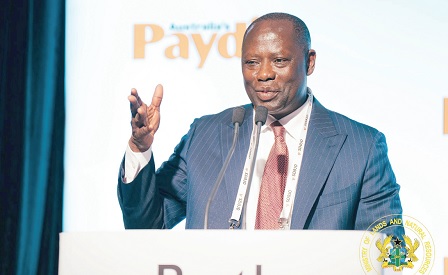
On licensing, Buah said the District Mining Committees would end the practice of miners turning up with Minerals Commission licences without the knowledge of chiefs, and before anyone has checked how the land is being used.
On community benefits, he said Community Development Agreements would become mandatory as part of the mining lease, with companies and host communities agreeing development projects together.
He said firms would also have to train local people, so communities cannot be told years later that nobody qualifies for jobs at the mine.
“Let’s have an agreement with the communities that in the next ten years, the mine is going to help us produce the next geologists and engineers from this village or mining community,” he said.
On exploration, the bill targets licence holders who keep big parcels of land idle for years while they hunt for investors.
Buah said reconnaissance licences would be scrapped. Exploration licences would run for two years with conditions, then could be extended to five, after which land where no gold has been found would go back to the community for farming.
Mining royalties: from a flat rate to a sliding scale
The flat royalty has already given way to a sliding scale of 5 to 12 per cent that rises and falls with mineral prices, under the Minerals and Mining Royalty Regulations, 2025.
Buah said the old regime let companies fix a production cost of about US$1,800 an ounce as the benchmark, even as gold climbed to US$4,000 and US$5,000.
“Gold prices may go all the way to 4000 dollars, and they are claiming the profit, and we’ve locked it up,” he said.
State special share and local processing
The draft also tightens the state’s hand. A company that fails to issue the Republic a free special share within two months could be fined up to the cedi equivalent of US$150,000, against a US$10,000 maximum now, according to Reuters’ review.
The special share already exists under Section 60 of the Minerals and Mining Act, 2006 (Act 703). It can give the state a veto over big decisions, such as winding up the company or selling a mining lease.
The bill would also let the government order that minerals be processed locally, and allow later restrictions on exports of raw concentrates.
The revised bill, once laid, will still have to go through Parliament’s committee and plenary stages before it can become law.
Until then, Act 703 remains the governing law, and licences and leases are still issued under it.